The Importance of Regular Maintenance for Truck Safety
The Importance of Regular Maintenance for Truck Safety
Truck drivers and fleet managers work on a tight schedule, and pre-trip inspections and preventative truck maintenance can feel like they slow down your operations. But gaps in consistent maintenance and safety checks can lead to driver injury and public safety hazards that raise a glaring red flag for overall trucking safety. The condition of brakes, tires, lights, and other safety-critical systems on flatbed trucks has a direct impact on driver safety and the overall integrity of the trucking industry.
Keep reading to learn more about the importance of routine maintenance checks and proactive repairs for truck driver safety, as well as how truck safety systems like fall prevention solutions can increase road and workplace safety for drivers, motorists, and workers.
Missed Maintenance Tied to an Increase in Trucking Safety Issues
Recent data from the Federal Motor Carrier Safety Administration (FMCSA) shows that lax maintenance is a growing concern in the trucking industry. 2026 analysis done by the Truck Accident Legal Team at Pritzker Hagemen shows that maintenance and equipment issues account for 59.6% of all recorded regulatory violations, and nearly 20% (19.98%) of inspections show that trucks are deemed too unsafe to operate.
The Financial Cost of Neglecting Truck Maintenance
Driver and public safety are the biggest priorities when it comes to timely truck maintenance, but there are financial benefits to consider, too. Regular truck maintenance and inspections result in:
- Better fuel efficiency: When you stay up to date on truck maintenance, your truck operates more efficiently and gets better mileage.
- Increased longevity: Catching issues early and replacing parts when needed keeps your truck on the road longer.
- Reduced repair costs: Preventative maintenance is much more cost-efficient than paying for costly repairs and the downtime that comes with unexpected breakdowns.
- Ensured compliance: Penalties and fines incurred when your truck fails to meet regulatory compliance hurt your bottom line.

How Truck Maintenance Improves Driver Safety
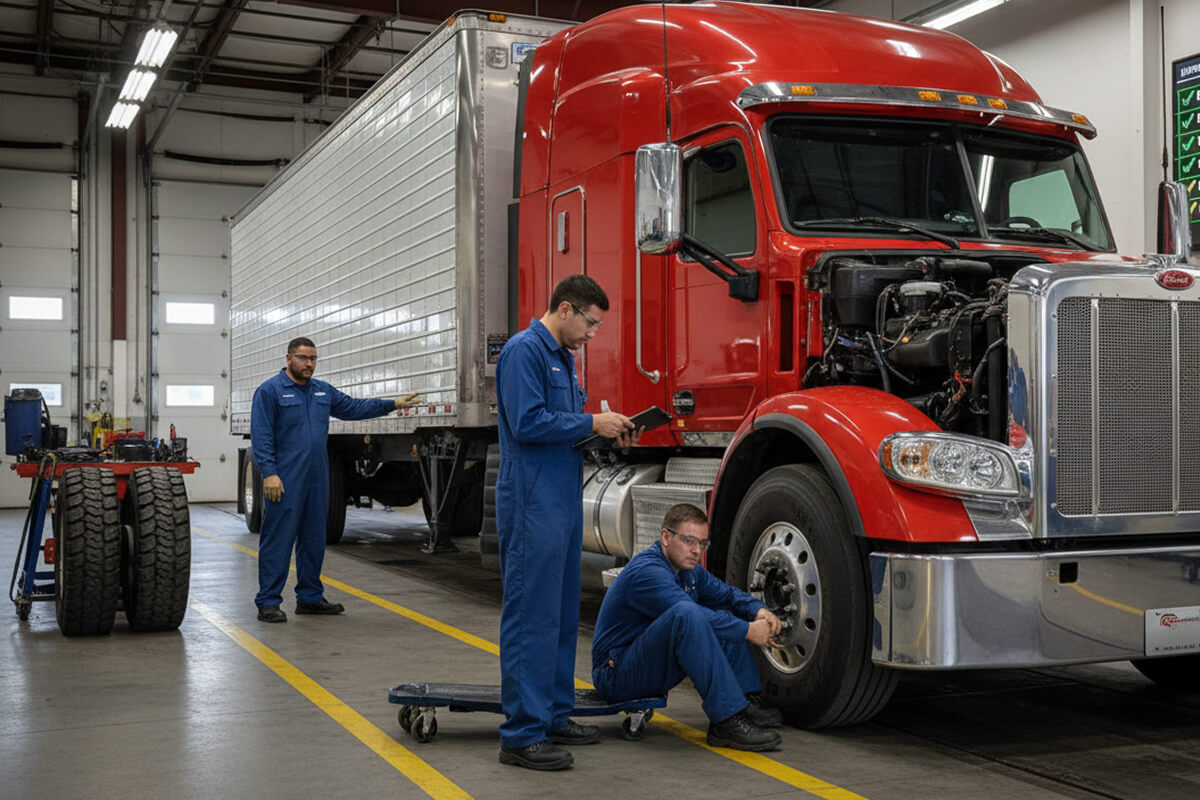
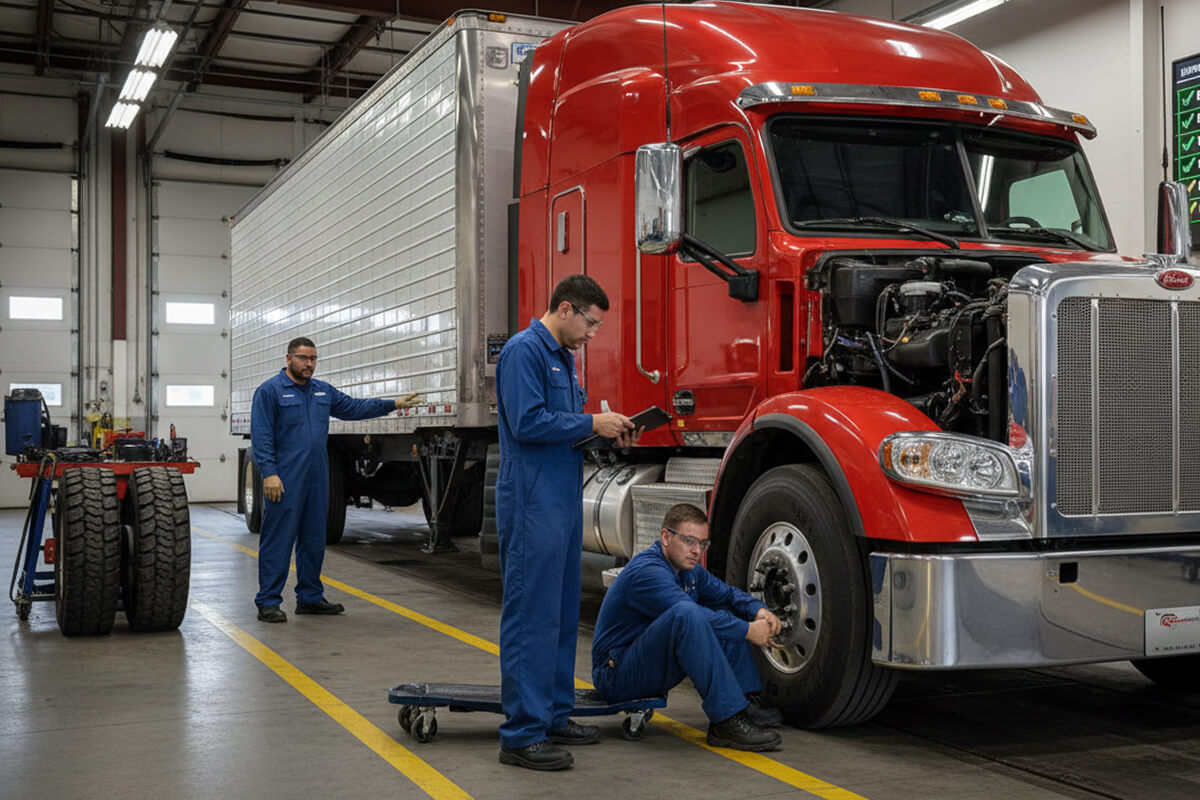
Proactive inspections and regular maintenance are critical for driver comfort and safety. Routine inspections keep drivers and fleet owners compliant with federal regulations, and staying on top of maintenance helps you catch issues early and prevent serious injury.
Regular truck maintenance is the most effective safeguard against sudden and often catastrophic mechanical failures during operation. By sticking to a strict preventative maintenance schedule, technicians can identify and replace worn-out parts like brake pads, tires, and suspension components before they reach a critical failure point.
This proactive approach ensures that vital safety systems are always operating at peak efficiency and gives the driver complete control over the vehicle, especially during an unexpected emergency or when driving in bad weather.
Proper maintenance also includes securing and inspecting the load itself, which is vital for preventing injury on the road and at drop-off/pickup points. Regular inspections prevent cargo from shifting or detaching, which can become dangerous projectiles or obstacles. Mechanical safety inspections also ensure that ancillary components like landing gear and liftgates are fully functional during loading, unloading, and coupling.
By ensuring the entire truck is in excellent working order, preventative maintenance enhances safety both on the road and in the warehouse. A reliable on-track strap system or other engineered truck safety solutions can provide additional safeguards.
Clear visibility is non-negotiable for safe operation. Maintaining a truck’s visibility components includes ensuring all headlights, tail lights, brake lights, and turn signals are functional, clean, and aligned correctly. Proper lighting ensures the driver can see clearly in poor weather or at night and that the truck is visible to other motorists.
A commitment to regular maintenance extends the safety benefits beyond the road and into the work environment surrounding the truck. For the driver, a well-maintained cab with functional seats, HVAC systems, and properly calibrated mirrors reduces fatigue and increases comfort, allowing them to remain focused and alert for longer periods. This prevents driver error, which is a major contributor to accidents.
Improve Safety With Truck Fall Prevention’s Systems
Truck maintenance is just one part of a two-pronged strategy for optimal driver safety. Investing in truck fall protection protects truckers and dock workers from falling during loading, unloading, and coupling.
Truck Fall Prevention helps trucking companies create safer work environments with our line of OSHA-compliant solutions engineered specifically for open-deck trailers. Explore our products to discover how truck fall prevention systems work in tandem with routine truck maintenance to create a safe and efficient environment.
Enhance Driver Safety With Customizable Truck Safety Systems
At Truck Fall Prevention, our specialists can fully customize your safety system to meet your flatbed’s specifications, including the width, the height, the wheelbase, storage and space constraints. All work is performed in our fabrication facility in Taylor, Michigan.
Innovative Truck Safety Protections
Truck Fall Prevention offers multiple product formats, including mobile platforms to on-truck kits, that can enhance the safety of your fleet. Our truck fall prevention system is utilized on open deck trailers at construction sites, warehouses, distribution facilities, and manufacturing plants nationwide. Our system meets all OSHA fall prevention standards and is DOT compliant.
To get a quote on truck fall prevention systems for your flatbed truck, contact Truck Fall Prevention today.
FAQs About Truck Maintenance
Test for warning signs like excessive smoking, loss of oil pressure, or a decrease in power. Engine and drivetrain problems can become major issues if not addressed right away.
It can vary depending on engine type and fuel efficiency. Typically, trucks require oil changes every 25,000 miles. Always check your manufacturer’s recommendations.